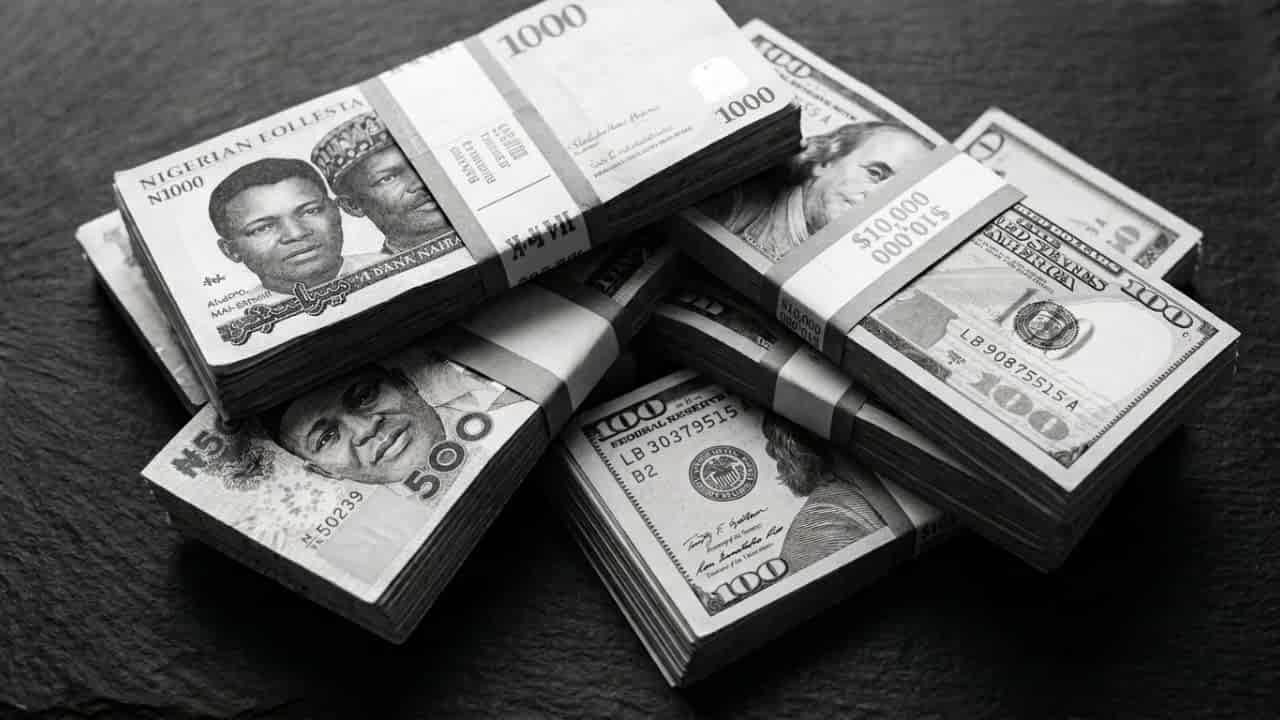
Get today’s exchange rate from US dollar, euro and British pounds to Nigerian naira on both the official and black market. Stay informed before making any conversion.
The naira’s exchange rate can change from one day to the next. One minute it’s a good deal, the next it’s all messed up. That’s why I update this page every morning.
If you’re sending money, paying school fees or just checking the naira’s value, you’ll find the official CBN rate and the black (parallel) market rate here, all in one spot. No need to dig through social media or news websites.
If you pay online often, also look at the top virtual dollar cards in Nigeria. They make spending in dollars simpler when rates move.
Today, 26 October 2026, $1 is ₦1,361.83 at the official CBN rate and ₦1,412.12 on the black market.Dollar, Pounds and Euro to Naira Official & Black Market Rates – 26 Oct 2026
Buy rate (₦1,356.86): what the dealer pays when they buy dollars from you. Use it when you have dollars and want naira.
Sell rate (₦1,412.12): what the dealer charges when they sell dollars to you. Use it when you have naira and want dollars.
| Currency | Official CBN rate | Black market buy | Black market sell |
|---|---|---|---|
| US dollar ($1) | ₦1,361.83 | ₦1,356.86 | ₦1,412.12 |
| British pound (£1) | ₦1,821.46 | ₦1,792.96 | ₦1,868.69 |
| Euro (€1) | ₦1,525.12 | ₦1,495.94 | ₦1,606.06 |
Sources: official rates from the Central Bank of Nigeria (CBN); black market rates from Aboki Forex and licensed BDC dealers. Checked and updated every morning by Oluboba Ayodeji.
How Much Is $100 in Naira Today?
| Dollars | Official rate | Black market (sell) | Extra you pay on the street |
|---|---|---|---|
| $1 | ₦1,361.83 | ₦1,412.12 | ₦50.29 |
| $10 | ₦13,618.30 | ₦14,121.20 | ₦502.90 |
| $50 | ₦68,091.50 | ₦70,606 | ₦2,514.50 |
| $100 | ₦136,183 | ₦141,212 | ₦5,029 |
| $500 | ₦680,915 | ₦706,060 | ₦25,145 |
| $1,000 | ₦1,361,830 | ₦1,412,120 | ₦50,290 |
The street difference is small on $100, but on school fees or a supplier payment it adds up quickly.
Analysis How the Naira Moved in the Past 7 Days
| Date | Official (₦ per $1) | Black market sell | Change |
|---|---|---|---|
| 26 Oct 2026 | ₦1,361.83 | ₦1,412.12 | No change |
| 24 Oct 2026 | ₦1,361.83 | ₦1,412.12 | +₦28.83 |
| 23 Oct 2026 | ₦1,333 | ₦1,405 | +₦13 |
| 22 Oct 2026 | ₦1,320 | ₦1,405 | No change |
| 21 Oct 2026 | ₦1,320 | ₦1,405 | No change |
| 20 Oct 2026 | ₦1,320 | ₦1,405 | No change |
| 19 Oct 2026 | ₦1,320 | ₦1,405 | No change |
The trend: The naira has traded within a moderate range of ₦1,320 to ₦1,361.83 to the dollar at the official rate since 30 September. Over the past week it weakened by ₦41.83 (3.2%), from ₦1,320 to ₦1,361.83. The naira’s recent movement is being supported by rising foreign-exchange reserves, increased FX trading activity and potential investor inflows, while global dollar movements and oil earnings also play a role. However, the official exchange rate has remained broadly stable, so it is too early to call this a sustained recovery without continued dollar inflows and a narrowing gap between the official and parallel markets. The gap between the official and black market rates has narrowed from about ₦85 to ₦50.
What it means for you: A weaker naira raises the naira cost of imports, foreign school fees and anything priced in dollars. If you receive dollars from abroad, each one now buys more naira. The street premium of about 4% adds up on large amounts, so compare a bank or licensed operator before buying cash.
What to watch:
- The black market gap narrowed this week. If it keeps shrinking, official and street rates are moving closer together.
- The naira moved more than 1% in a week, faster than usual. Expect bigger day-to-day swings.
- If reserves rise, dollar supply improves and both exchange rates strengthen together, the naira's recovery is more likely to last. If the official rate holds while the parallel-market rate worsens, pressure may be building beneath the surface.
Why Official and Black Market Rates Differ
The official rate is determined through trades in the Nigerian Foreign Exchange Market (NFEM). The Central Bank of Nigeria (CBN) determines it based on the average of trades made that day, weighted on size. It is used by banks and licensed dealers.
The black market rate is the price charged by the Bureau De Change (BDC) dealers and street dealers. This happens when the demand for cash dollars, pounds or euros exceeds what the banks have in stock. The greater the shortage, the higher the disparity between the two rates.
5 Things to Check Before You Exchange Money
1) Comparison to the official exchange rate. If there is a large difference between the quoted and table rates, ask why.
2) The proper side of the rate. When purchasing dollars, check the sell rate; if selling dollars, check the buy rate.
3) Check for possible fees. Some currency transactions do not include commissions or transfer charges in the quote.
4) Use licensed currency dealers. A licensed BDC or your own bank are more reliable; there is always a danger of counterfeit bills or other schemes from street dealers.
5) Do not rush when exchanging large sums. If possible, compare quotes over 2-3 days.
A Brief History of Major Currencies
Nigerian Naira Currency:
Video: Watch a corporate documentary of the Central Bank of Nigeria.
The colonial ordinance of 1880 saw shillings and pence become the official currency of British West Africa.
The West African Currency Board (WACB) issued banknotes and coins of Nigeria, Ghana, Sierra Leone and the Gambia from 1912 to 1959.
Nigeria, after its independence, reissued its currency in 1962 to reflect its new status, and in 1968 after the civil war.
In 1973, the currency was re-named the naira. In 1977, a new ₦20 note was issued, featuring the picture of the late General Murtala Ramat Mohammed, who died in 1976.
In 1984, the colours of all the banknotes were changed in order to prevent currency trafficking.
The ₦20 note switched to polymer in 2007, followed by the ₦50, ₦10 and ₦5 notes in 2009.
CBN issued a special ₦50 note in 2010 and a special ₦100 note in 2014.
American Dollar Money:
The United States Mint, which came into existence in 1792, introduced dollar coins. These dollar coins were based on the Spanish dollar, which was produced in Peru and Mexico.
Spanish dollars and Mexican pesos ceased to be legal tender in America through the Coinage Act of 1857.
The first American dollar bills were demand bills, issued in 1861 during the Civil War period. The United States notes or legal tender notes appeared in 1862 while standardization took place in 1869.
Initially, the value of a dollar was determined by its weight in terms of gold or silver. Then, it turned out to be paper money that could be exchanged with gold.
Currency of British Pounds:
Pound sterling is an English monetary unit that has been in use for more than 1,000 years. Its name derives from the Latin “libra” which means balance or weight.
The first pound coins – gold sovereigns – came out in 1489 during Henry VII reign. Bank of England commenced issuance of banknotes in 1694. Originally, banknotes contained hand-written information and only in 1855 did Britain get full printed banknotes.
Until 15 February 1971, the pound was subdivided into shillings and pence, but after that day, the United Kingdom adopted decimal currency. In June 1972, Britain introduced free-floating pound that determines its exchange rates.
In 2002 when all other EU members switched to euros, Britain decided to retain the pound.
At present, the pound exchanges against the naira at both official CBN rate and black market rate listed in the table above.
FAQs on Dollar, Pounds and Euro to Naira Exchange Rates
What’s the dollar to naira rate today?
As of 26 Oct 2026, $1 is ₦1,361.83 at the official CBN rate and ₦1,412.12 on the black market. The full table, including pounds and euros, is at the top of this page.
How much is $100 in naira today?
As of 26 Oct 2026, $100 is about ₦136,183 at the official rate and ₦141,212 at the black market selling rate. The conversion table near the top shows $1 to $1,000.
Why do black market rates differ?
Since there is higher demand for cash dollars, pounds and euros than banks can easily provide, dealers ask for a premium.
Why does the official rate not change during weekends?
The official market does not operate on Saturdays, Sundays or public holidays. So, the rate remains the same until the next trading day.
Where is the best place to exchange dollars or pounds in Nigeria?
It is safer to exchange currencies in banks or licensed Bureau De Change. However, if you need cash quickly, street dealers are still used.
What does Bureau De Change mean?
Bureau De Change is a licensed dealer in foreign currencies who earns from the difference between the buying and selling rate.
Are exchange rates volatile?
Yes. The rates fluctuate on a daily basis based on market trends, CBN policies and world events. Always verify before exchanging.
What is the easiest way to keep up with exchange rates?
Bookmark this page or subscribe to the newsletter for updates and money-saving tips.
That was all for today’s rates. Now you have all the information regarding the conversion of the dollar, pound, and euro to naira.
Rates may fluctuate so always verify before making a transaction or exchanging money. I update this page daily so bookmark it.