Lekki’s New AI Data Centre Is Here. Is It Built for Nigerian Founders?
Nigerian startups spend an estimated $850 million a year on foreign cloud services. A new Lekki data centre promises to change that, but the first phase may not be built for founders like you.

Anytime we discuss about AI infrastructure in Nigeria, I ask “where’s the electricity supposed to come from?”
The nation’s power grid is said to fluctuate between 4,000 and 5,000 MW for 200 million people, while a massive data centre can pull as much energy needed for an entire town.
If you develop software in Nigeria, you likely pay for cloud services in dollars and store your data overseas. This new data centre in Lekki is the first genuine attempt to revolutionize AI workloads.
Let’s look at what it entails.
What is actually being built
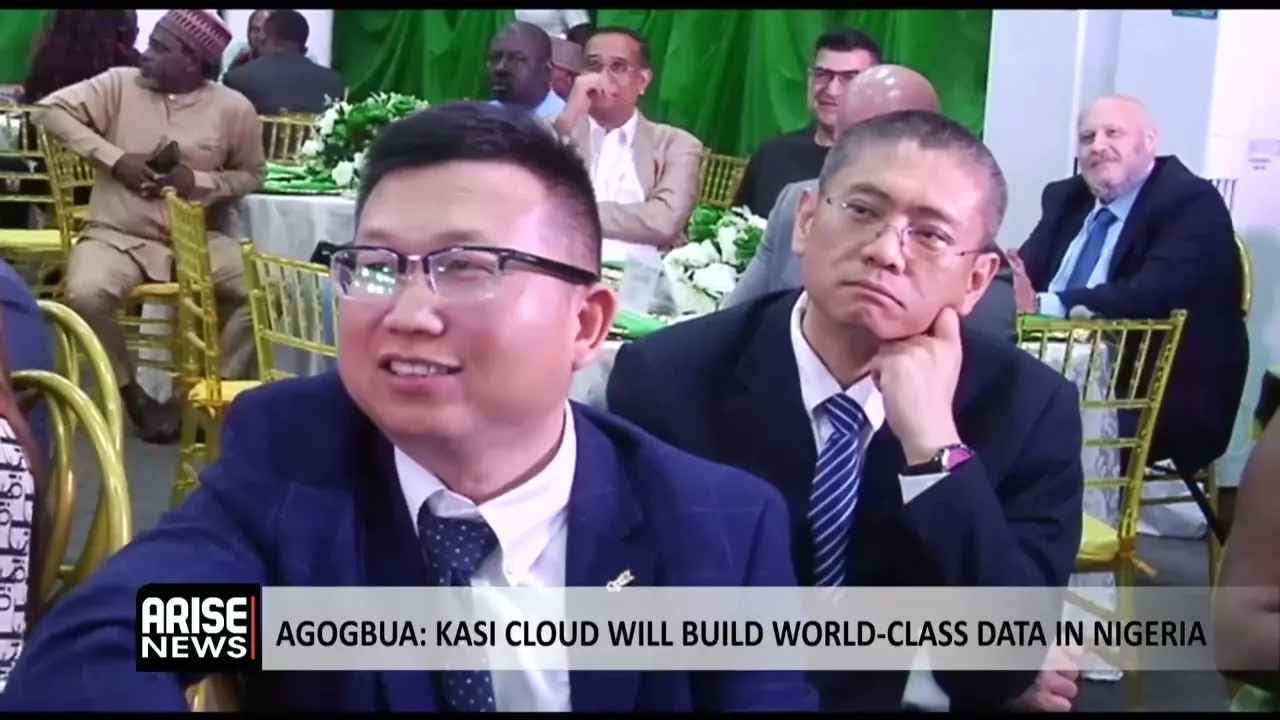
The facility’s run by Kasi Cloud, a business based in Nigeria. One of the founding investors is the Nigerian Sovereign Investment Authority. They started building a $250 million campus back in 2022, and kicked off the project officially earlier this year.
It’s important to keep the scale in mind. Phase one gives 5.5 MW, with plans to hit 100 MW of IT load at full build. It’s a work in progress, not some massive finished site.
The power question
The campus doesn’t disconnect from the grid. The announcement says it mixes hybrid gas, solar, and battery power with N+1 backup and a special 132kV link from the Transmission Company of Nigeria.
It’s a hybrid setup, tied into the grid but with a good chunk of local generation as a safety net. It shows what’s really going on.
Speakers at a Lagos conference contended that data centres in Africa will increasingly need to generate their own power, as the grid supply in many regions is too unreliable for AI operations.
Kasi’s chief executive has stated that the true issue lies in dependable delivery rather than in generation.
The pattern is extending. A developer is engaged in a $50 million independent power project on Victoria Island designed to reduce the district’s reliance on the national grid and provide direct power to data centres.
The case for it
This is where I believe the true debate exists. It’s not about foreign capital “giving up” on Nigeria, as this initiative is driven by Nigerians and integrated with the grid.
It’s what you get when steady electricity is treated like a private product that just wealthy operators can build.
When the most reliable power in an area is locked behind a data centre fence and nearby businesses are stuck with diesel, that’s a two-tier setup, whether anyone meant it that way or not. Three questions will determine if Lekki turns into a bridge or a fortress.
- Does surplus power sometimes go to the grid or to neighbours? I didn’t find anything that says it will.
- How many jobs are actually real and nearby? The figure “hundreds” is an estimate, with many positions being specialist roles.
- Who are the clients, and where does the value end up? A facility that is carrier-neutral caters to numerous tenants. While its public materials stress local data residency, the long-term financials hinge on who leases the racks.
The bottom line
Lekki is not the ultimate barrier in the pessimists’ narrative, nor is it an outright victory for national progress. This is an early sign that whoever addresses the power problem first in Nigeria will create the future. The policy challenge lies in ensuring that the solution remains public.
References for Lekki’s New AI Data Centre Is Here. Is It Built for Nigerian Founders?
- . (October 15, 2025). Power ‘No Longer a Problem’ for African Data Centers – Agogbua. Techeconomy.
- . (May 27, 2026). West Africa's First Hyperscale-Ready Data Centre Opens in Lagos. TechTrendsKE.
- . (March 4, 2026). Kasi Cloud set to launch Nigeria’s first AI-ready hyperscale data centre in April 2026 – ITEdgeNews. ITEdgeNews.